









If you operate a private security firm, you have likely looked at the sky and wondered what happens when an unauthorized drone starts hovering over your client’s property. The question of whether drone jamming is legal for private security is the first thing that arises in nearly every conversation about airspace protection. The short answer is almost always no, but the reality of how to handle these incursions is far more nuanced than simply flipping a switch or powering up a jammer.
Detection Versus Interference Strategies
When weighing how to build a robust defense, you must understand the fundamental trade-off between simply monitoring the sky and actively taking control of it.
Passive detection is the gold standard for compliance. It is fully legal and provides high-level situational awareness without risking collateral damage to the surrounding environment. Conversely, RF jamming—the act of flooding a frequency with noise—is generally illegal for private entities. It carries a high risk of disrupting critical communications, such as emergency responder radios or local Wi-Fi, leaving you potentially liable for the resulting chaos.
A more advanced, middle-ground approach is protocol manipulation. Unlike jamming, this method is legal and safe. It offers full operational control, such as a controlled landing of the drone, by interacting with the device’s own communication handshake. While this requires higher technological complexity than basic monitoring, it avoids the regulatory minefield that makes traditional jamming a non-starter for most professional firms.
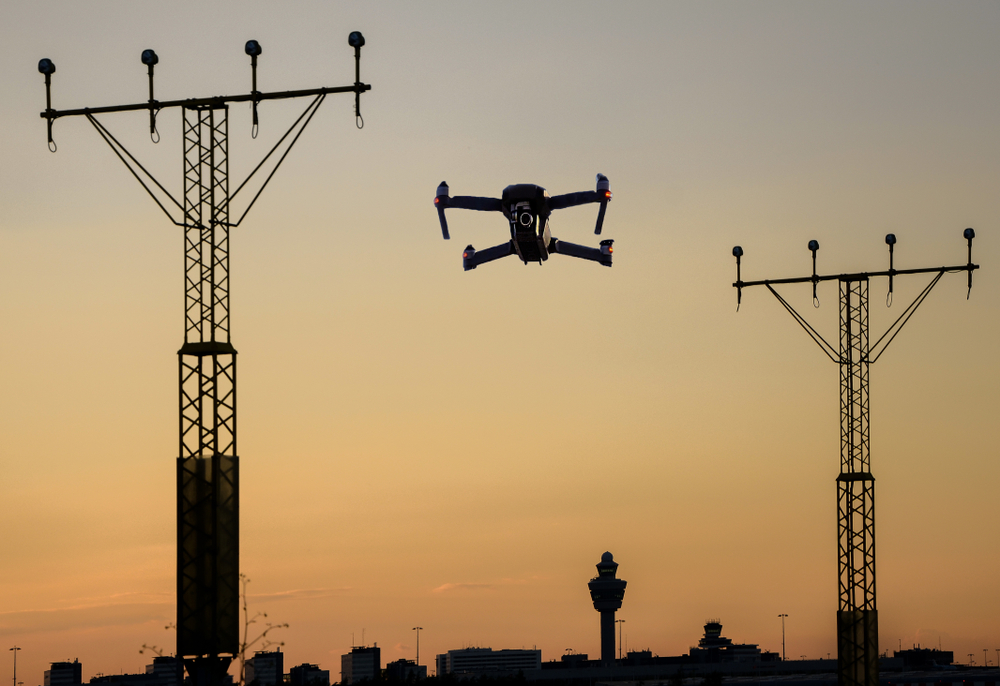
Why Jamming Remains a Dangerous Gamble
When someone asks if drone jamming is legal for private security, they are usually looking for a quick fix. The reality is that most countries have strict laws prohibiting the interference of radio frequencies. Jamming is a blunt instrument. It creates a “bubble” of silence that does not just stop the drone—it potentially knocks out cellular networks and GPS signals in the surrounding area.
If you disable a drone near a hospital, an airport, or a busy intersection, you are legally and morally responsible for the fallout. This is why many security professionals are shifting away from kinetic or interference-based methods and moving toward more precise, cyber-based anti-drone protection. Jamming is not just a regulatory hurdle; it is a liability nightmare waiting to happen.
The Shift Toward Protocol Manipulation
This is where the industry is heading. Instead of flooding the air with noise, advanced systems like those developed by Sentrycs use protocol manipulation to communicate with the drone in its own language. By identifying the drone’s unique communication handshake, the system can command the device to land safely in a pre-designated zone.
This approach solves the core dilemma of legality by operating within the framework of cybersecurity rather than signal disruption. It is a highly effective counter-drone solution that maintains the safety of the surrounding environment while keeping your firm in the good graces of federal regulators.
Integrating Multi-Layer C-UAS Systems
True security rarely comes from a single piece of hardware. When you look at the best multi-layer Counter-Unmanned Aircraft Systems (C-UAS), you see a combination of sensor fusion—radar, optical cameras, and RF analysis—working in harmony.
A layered approach allows your team to verify the threat before taking action. For instance, a long-range radar might pick up a target, but the RF sensor confirms it is a commercial drone rather than a bird or a plastic bag caught in the wind. This level of accuracy is what turns a panicked reaction into a professional security operation. Companies like Sentrycs have made this their standard, focusing on autonomous operation so that your security team does not have to be experts in signal processing just to keep a perimeter secure.
Navigating the Future of Airspace Security
The real question is not just about what you are allowed to do today, but what you can sustain tomorrow. Regulations are constantly evolving, and the drones themselves are becoming smarter, faster, and harder to detect.
If you rely on outdated methods, you might find yourself in a position where you have to choose between breaking the law and letting a threat pass. The most successful security providers treat the air above their clients as a managed space rather than a blind spot. By investing in technology that detects and identifies threats without disrupting the local community, you are buying more than just gear; you are buying peace of mind. Does it take more effort to set up a sophisticated, non-kinetic system than it does to buy a jammer off the dark web? Absolutely. But in the long run, the professional approach is the only one that does not end with a visit from federal regulators. Are you prepared to prove your defense strategy is as legal as it is effective?